AV Integration
The Art of Invisible Audio: Sound Systems That Disappear
How professional AV design creates sound systems that complement architecture instead of competing with it.
Five restaurant AV installations across Split — different venues, different challenges, different speaker solutions.
Ivan Boban
Updated May 31, 2026
Every restaurant has a sound problem — most just don’t know it. The ambient noise of conversation, kitchen sounds, street traffic, and HVAC systems creates a baseline that either works with or against the dining experience. Add music into that mix without professional design, and you get hot spots where speakers blast into nearby tables while distant corners hear nothing.
We’ve installed audio systems in dozens of restaurants across Split and the Dalmatian coast. Here are five that illustrate different challenges and solutions — from ultra-modern interiors to heritage stone walls, intimate wine bars to high-energy cocktail lounges.
The venue: A modern, upscale restaurant in Split with a dramatic interior — backlit onyx bar surfaces, geometric gold rod ceiling elements, navy leather booth seating, and moody ambient lighting. The design language is luxury contemporary. Any visible technology would clash.
The challenge: High ceilings (4m+) meant flush ceiling speakers would be too far from ear level to deliver warm, detailed sound. The restaurant needed zoned control — bar area at higher energy, dining area at conversation level — with seamless transitions between zones.
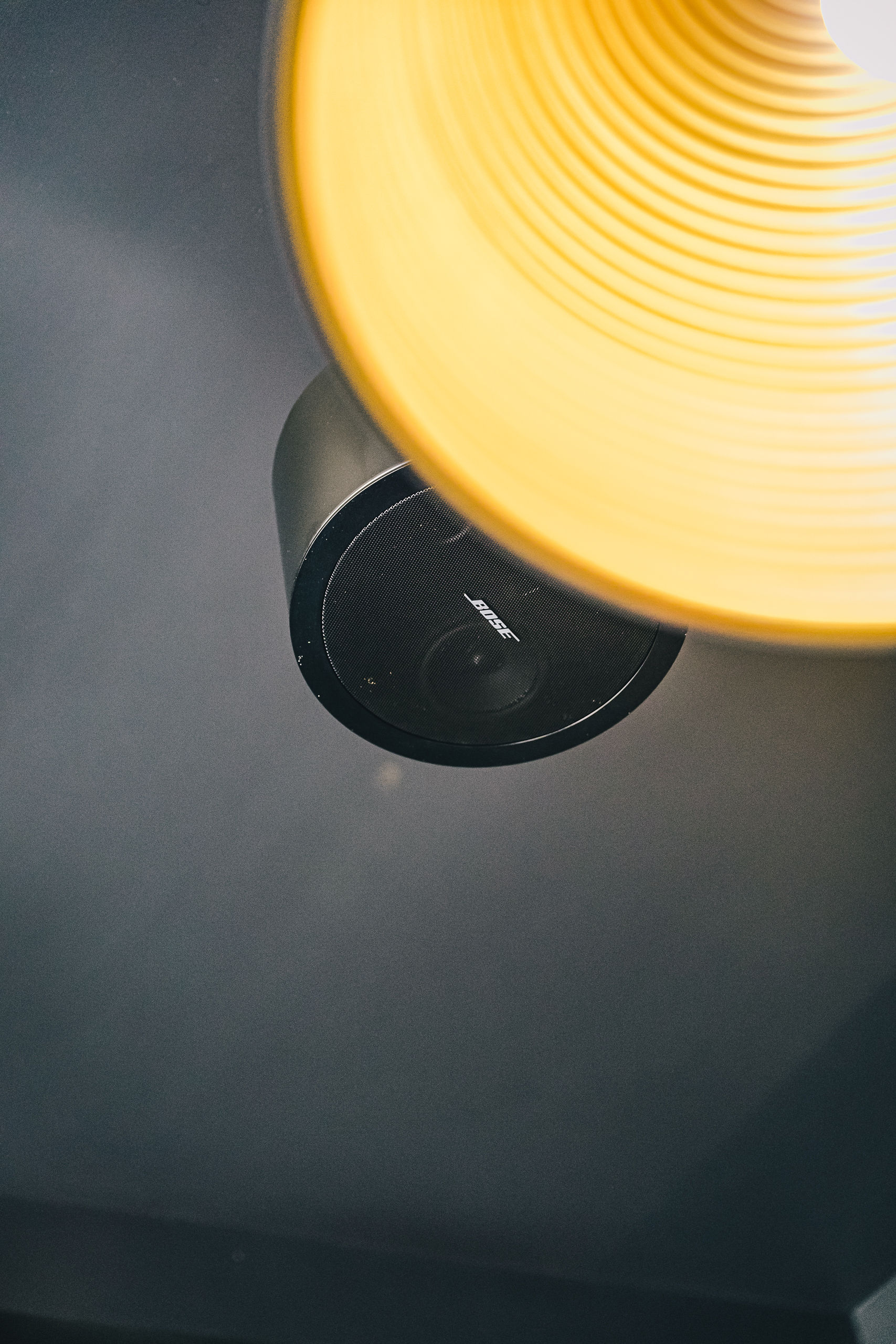
The solution: Bose DesignMax DM2P pendant speakers hung on custom gold-tone rods matching the existing ceiling elements. We interleaved speakers with decorative rods so the audio hardware genuinely disappears into the ceiling design. A Bose ControlSpace processor manages two primary zones (bar and dining) with a transition corridor between them.
The result: The owner reported that guests frequently comment that the restaurant “feels right” without identifying why. No guest has ever noticed the speakers. During evening service, the bar area runs 4-6dB hotter than dining — enough to create distinct energy zones without any hard boundary.
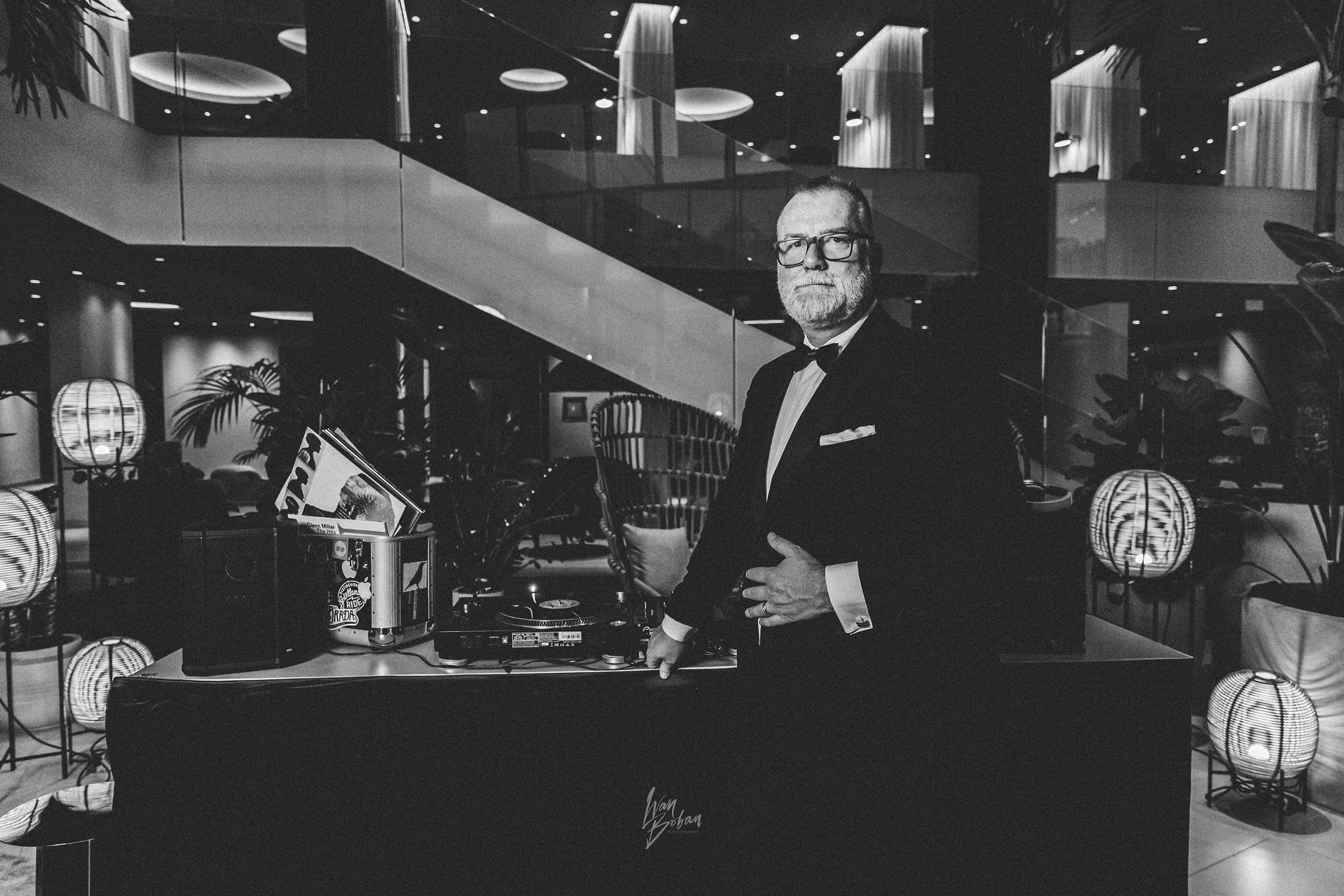
Bonus detail: Level also features a permanent Pioneer DJ XDJ-XZ installation for weekend evening sessions. The DJ output routes through the same ControlSpace processor, maintaining volume limits and EQ consistency regardless of who’s performing. This prevents the common problem of guest DJs pushing levels beyond what the room can handle.
The venue: A traditional Mediterranean restaurant with cream-coloured plaster walls, warm wood accents, and intimate table spacing. Classic Dalmatian hospitality — the kind of place where regulars have “their” table.
The challenge: No accessible ceiling void for flush speakers. Stone and plaster walls with limited mounting options. The intimate table spacing means every speaker position is close to at least one table — volume differential between tables near and far from speakers had to be minimised.
The solution: Bose FreeSpace FS2SE surface-mount speakers in white, positioned above sight line from seated positions. We used 6 speakers across the main dining area — more units at lower individual volume rather than fewer units at higher volume. This “distributed” approach creates even coverage without any single source being dominant.
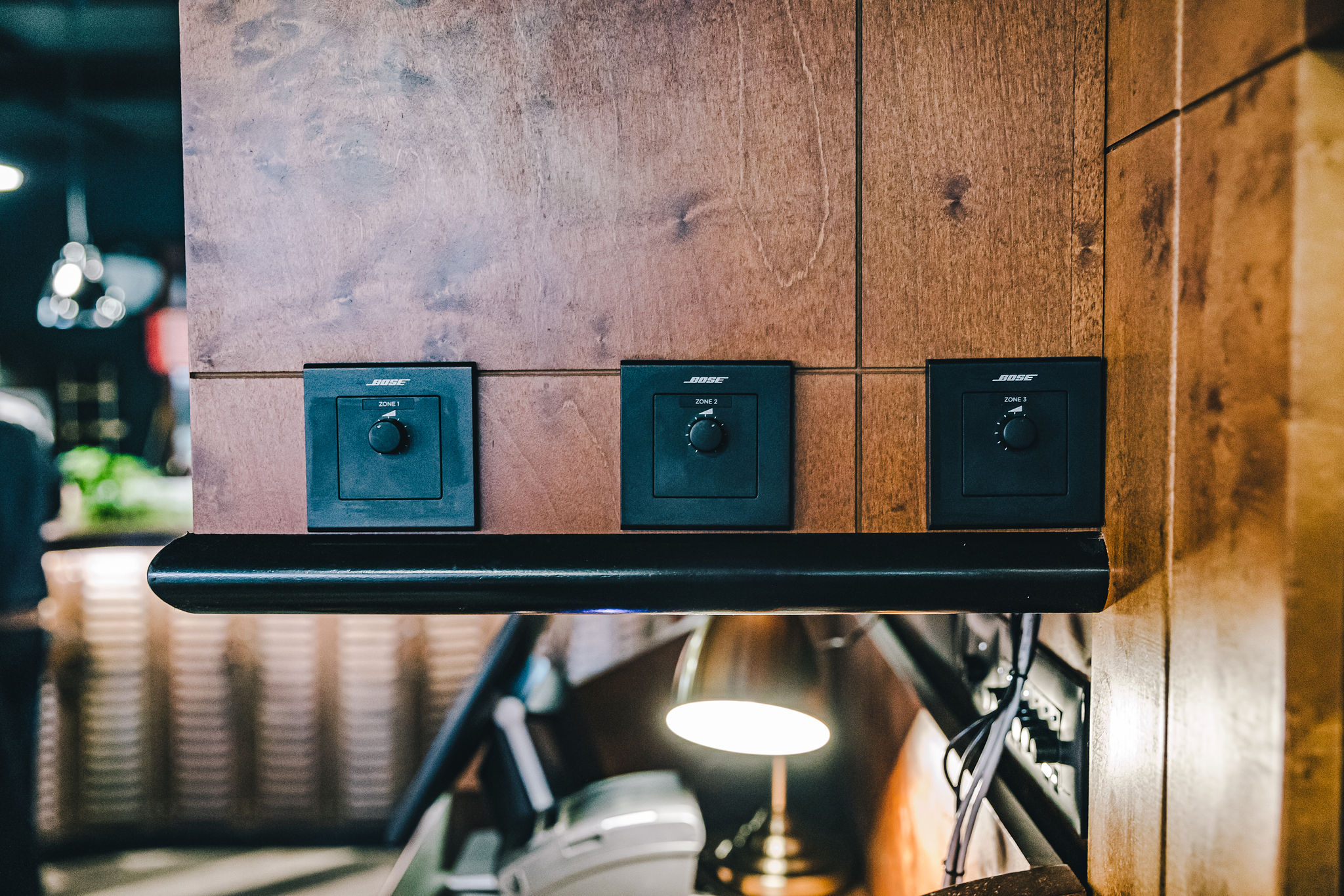
The result: Consistent SPL across all tables within a 2dB tolerance. The white speakers blend with the cream walls — visible if you look for them, but they don’t draw the eye. The owner manages volume from a simple wall-mounted controller with three presets: morning (very low), lunch (medium), and dinner (ambient).
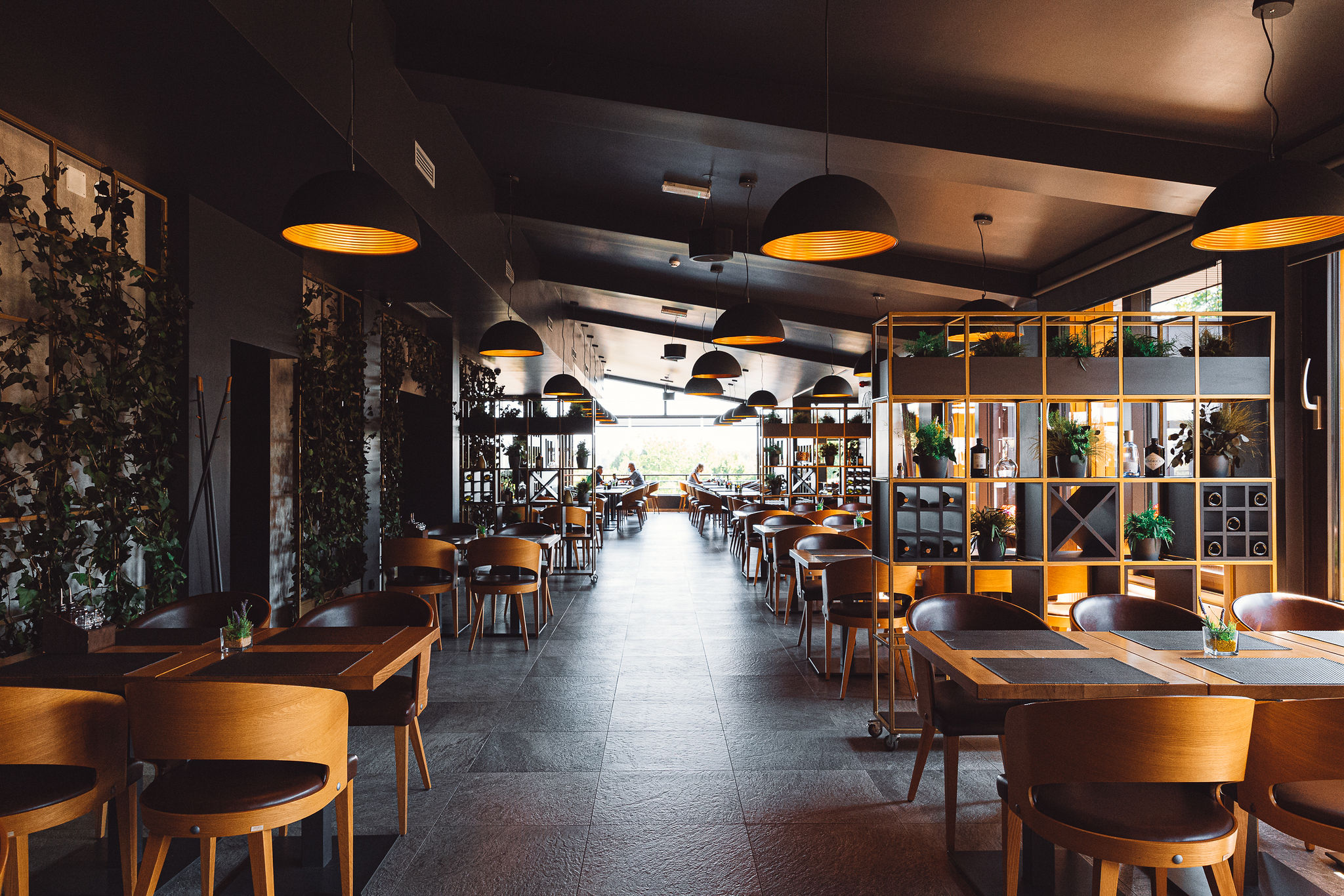
The venue: A contemporary bistro with clean lines, pendant light fixtures over the bar, and an open-plan layout connecting indoor dining to a partially covered terrace.
The challenge: Indoor-to-terrace audio continuity. Guests seated on the terrace need to hear the same music as indoor diners, but at adjusted levels (outdoor requires higher SPL to overcome ambient noise). The terrace opens and closes seasonally, so the system needed to work as indoor-only in winter and indoor-plus-terrace in summer.
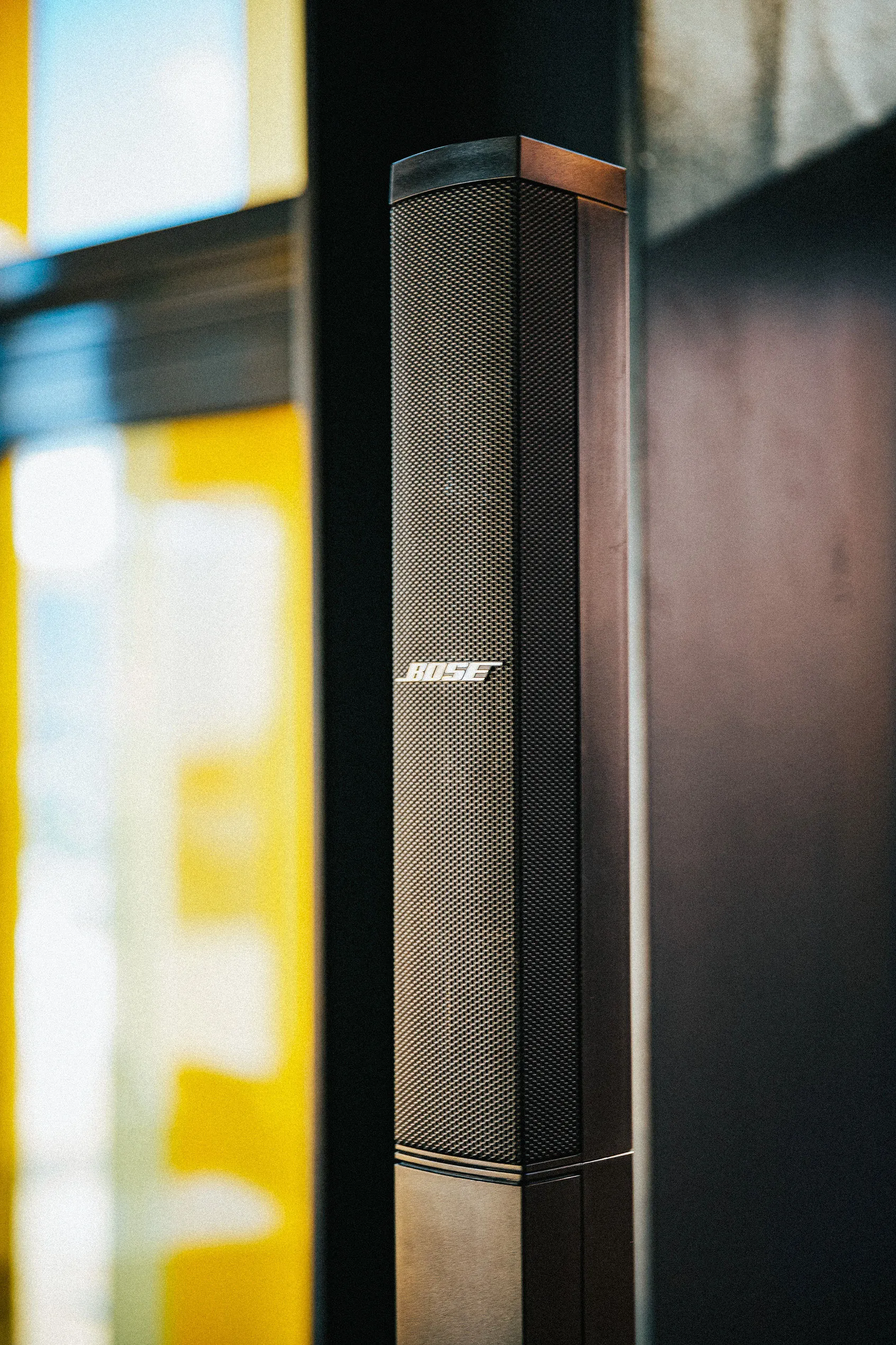
The solution: Bose FreeSpace pendant speakers indoors, matching the existing pendant light fixtures in style and position. Bose FreeSpace FS4SE surface-mount speakers under the terrace canopy for outdoor coverage. A simple zone switch allows staff to activate/deactivate the terrace zone in seconds.
The result: Seamless audio from indoor to outdoor across the season. During summer, the terrace zone runs independently — staff can adjust outdoor volume for wind conditions without affecting indoor levels. The switchover takes exactly one button press.
The venue: A heritage cocktail bar in Split’s old town with exposed stone walls, vintage décor, vinyl record collection, and an intentionally raw, analogue aesthetic. This is a venue where visible technology is part of the design language — turntables on display, vintage amplifiers as décor.
The challenge: Hiding speakers here would be wrong. The venue’s identity embraces equipment as visual elements. But the audio still needed to be professional-quality — the vinyl collection deserves proper reproduction, and cocktail-bar volume levels require headroom without distortion.
The solution: K-Gear speakers — a brand designed to be seen. Compact, design-forward cabinets in matte black, mounted on custom brackets that complement the industrial aesthetic. We paired these with a dedicated vinyl pre-amp chain that preserves the warmth of analogue playback through the professional speaker system.
The result: The speakers are visible, intentional, and beautiful — they look like they belong alongside the vintage turntables and exposed stone. Audio quality is noticeably superior to the consumer amplifier the venue previously used. The vinyl chain sounds warm and detailed, and the system has enough headroom for late-night DJ sessions without distortion.
The lesson: “Invisible” doesn’t always mean hidden. Sometimes the right design choice is speakers that are visible and proud — as long as they’re the right speakers for the aesthetic.
The venue: A design-led restaurant with bold colour choices — deep blue walls, gold pendant lights, natural wood tables, and a carefully curated visual identity where every element has been considered.
The challenge: The bold colour palette meant standard white or black speakers would stand out. The ceiling featured a mix of painted surfaces and decorative elements — flush mounting required precise coordination with the ceiling design.
The solution: Bose DesignMax ceiling speakers with grilles colour-matched to the ceiling surface. We coordinated with the venue’s interior designer during the fit-out phase to ensure speaker positions aligned with the ceiling layout — between pendant lights, away from decorative elements, in positions that maintain acoustic coverage without visual disruption.
The result: Completely invisible from guest seating. The colour-matched grilles disappear against the ceiling surface. The system was installed during the restaurant’s fit-out, which is always the ideal approach — retrofitting requires more compromise.
Despite their differences, these installations share principles:
Design-first thinking. In every case, we started with the interior design and worked backward to the audio solution. The speakers serve the space, not the other way around.
Distributed coverage. More speakers at lower volume beats fewer speakers at higher volume. This is the single most impactful decision in restaurant audio design.
Zone independence. Every installation includes at least two independent zones. The bar and dining room should never be locked to the same volume.
Operational simplicity. If staff need training to operate the system, the system is too complex. Presets, simple controls, and automatic scheduling remove human error from daily operation.
Future flexibility. Every system accepts a DJ input for events. Restaurants that host occasional live music or DJ evenings shouldn’t need temporary PA systems — the permanent installation should handle both modes.
If your restaurant still relies on a Bluetooth speaker or a consumer hi-fi, you’re underserving your guests and your brand. Professional audio integration costs less than you think and lasts 10-15 years.
Contact us for a free venue assessment — we’ll visit, listen to your space, and propose a system that fits your design and your budget.
Related reading:
Cosmic Production designs and installs audio systems for restaurants and bars across Croatia. Each installation is custom-designed for the venue’s architecture, aesthetic, and operational needs. Explore our AV integration services.
How professional AV design creates sound systems that complement architecture instead of competing with it.
How we deploy Bose Professional audio systems across Croatia's most demanding environments — from salt-air beach clubs to superyacht decks.
How to design hotel lobby audio: zones, speaker selection, music programming and volume control — by a team installing Bose systems in Croatian hotels.
From AV integration to DJ booking, we provide complete event production services across Croatia.