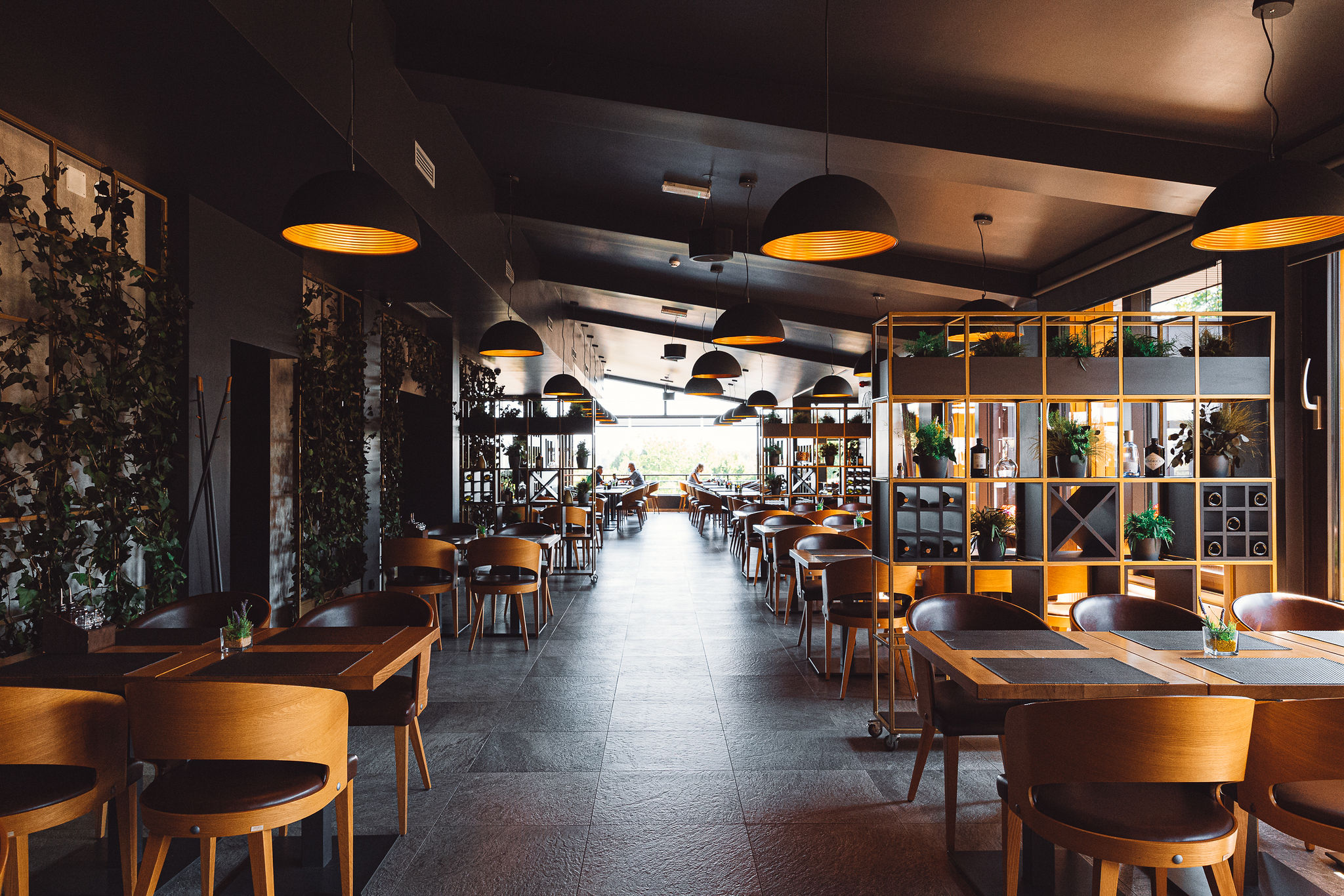
AV Integration
Bose Professional on the Adriatic: Bars to Superyachts
How we deploy Bose Professional audio systems across Croatia's most demanding environments — from salt-air beach clubs to superyacht decks.
How professional AV design creates sound systems that complement architecture instead of competing with it.
Ivan Boban
Updated May 31, 2026
Walk into a well-designed restaurant and you’ll hear music. You won’t see where it comes from. That’s the goal — audio so integrated into the architecture that guests never think about speakers. They just feel that the space sounds right.
This is what we do with our AV integration work across hotels, restaurants, and venues on Croatia’s Adriatic coast. We design sound systems that disappear into the environment while delivering consistent, zoned audio that the venue can control as easily as adjusting the lights.
Here’s the design philosophy behind invisible audio, and what it looks like in practice across five different installation approaches.
Most venues get their sound wrong in one of two ways. Either they install consumer speakers that look cheap and sound worse — shelf units propped in corners, Bluetooth speakers on windowsills — or they install visible professional speakers that dominate the visual design of the space. Both undermine the guest experience.
The hospitality industry has understood for decades that lighting, furniture, and tableware all contribute to atmosphere. Sound is the missing element in most venue designs — the sense that’s always present but rarely considered as part of the interior architecture.
When we design a system as “invisible,” we mean three things:
Visually integrated. Speakers match or complement the interior design — ceiling-flush, pendant-mounted in line with light fixtures, or wall-mounted in colours that match the surface behind them.
Acoustically even. No hot spots (too loud near a speaker) and no dead zones (too quiet in a corner). Guests at every table hear the same balanced level without any single source being identifiable.
Operationally simple. The venue staff can control everything — volume, zones, source selection, scheduling — without technical knowledge. If the system is too complex to operate, it fails regardless of how good it sounds.
Where it works: Hotel lobbies, upscale restaurants with flat ceilings, spa areas, corridors
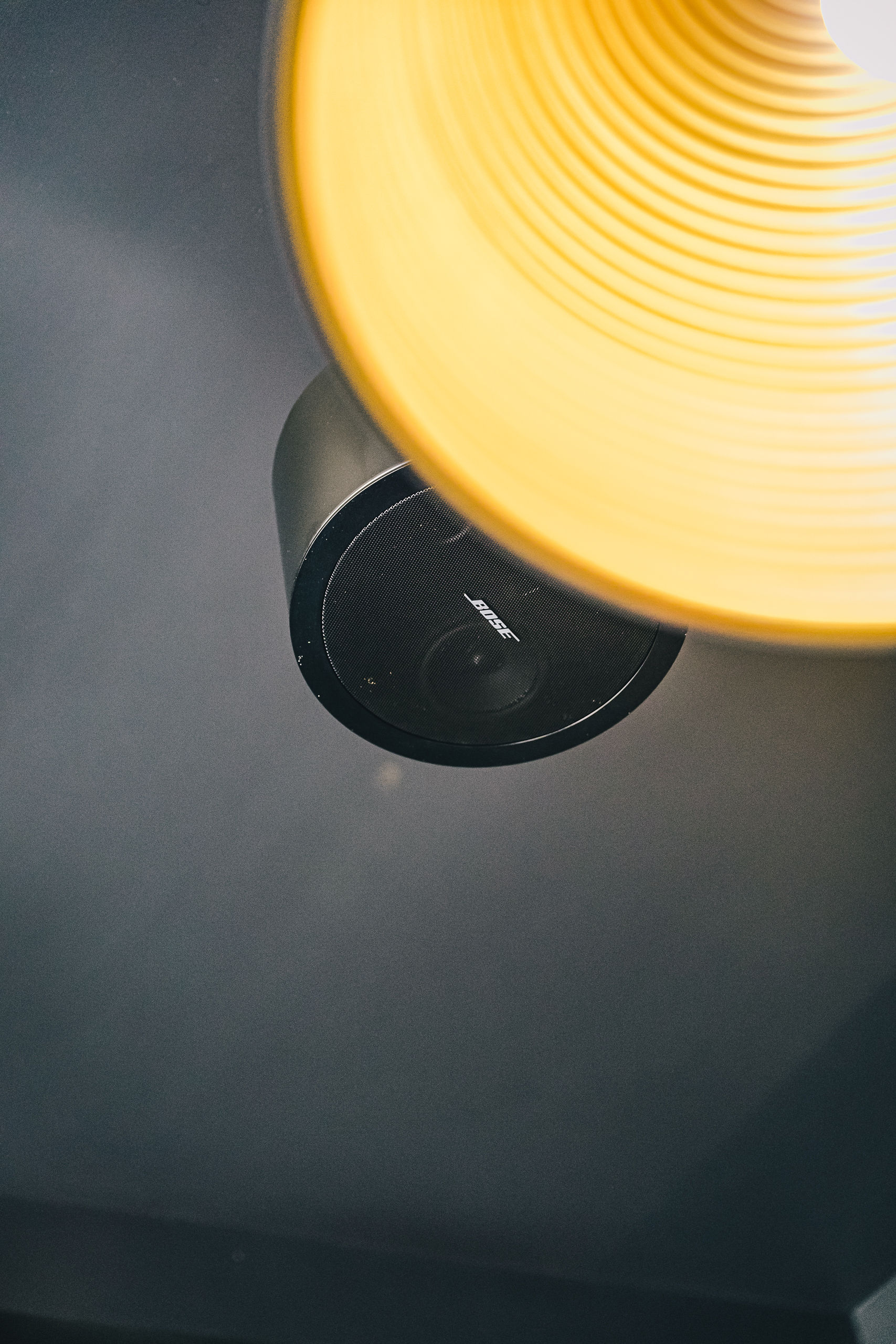
How it works: Speakers mount flush into the ceiling, visible only as a circular grille that blends with ceiling texture. The speaker body sits above the ceiling line, completely hidden.
What we use: Bose DesignMax DM2C-LP flush-mount ceiling speakers. Low-profile design (less than 10cm mounting depth), paintable grilles, and surprisingly rich sound for their slim profile. We typically space these at 2.5-3 metre intervals for even coverage.
The design advantage: Ceiling speakers create a “sound bath” effect — music comes from above, evenly, without any directional source. Guests can’t point to where the sound originates. This is the purest form of invisible audio.
The limitation: Ceiling speakers can’t deliver strong bass or high-energy music. They’re perfect for ambient, background, and mood-setting levels. If the venue needs dance-floor energy after dinner service, we supplement with concealed subwoofers or directional cabinets in specific zones.
Real example: A Split hotel lobby where we installed 8 flush ceiling speakers covering reception, lounge, and bar areas across three independent zones. The front desk can adjust each zone independently — quieter in the lounge during morning coffee, energised in the bar area during evening service. Guests consistently comment that the hotel “sounds great” without being able to identify why.
Where it works: Restaurants with exposed or high ceilings, industrial-style venues, wine bars
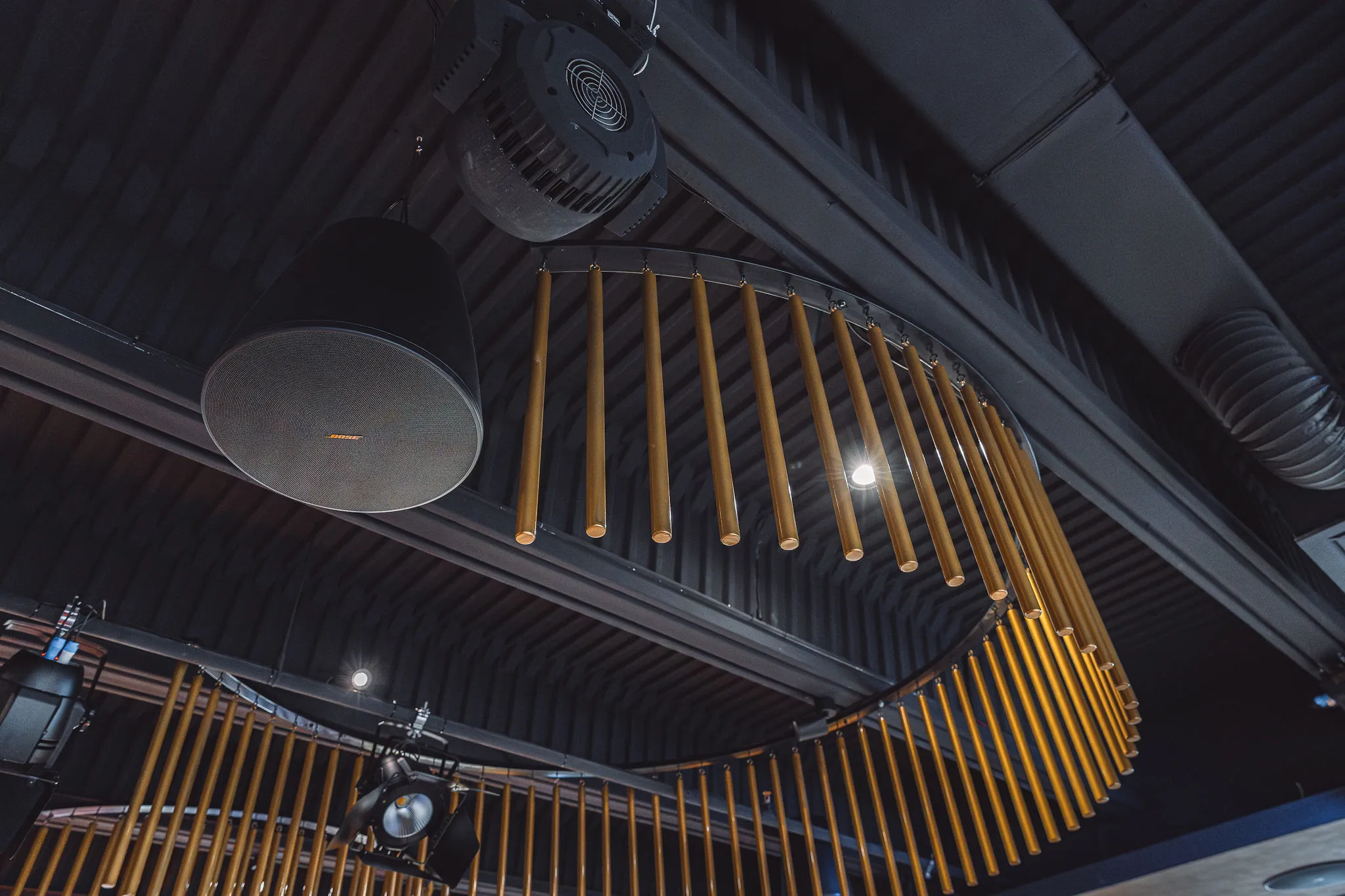
How it works: Pendant speakers hang from the ceiling on rods or cables, positioned alongside pendant light fixtures so they visually register as part of the lighting scheme rather than as audio equipment.
What we use: Bose DesignMax DM2P pendant speakers. Available in black and white, with slim cylindrical housings that look like contemporary light fixtures. We order custom pendant rod lengths to match the existing lighting drop.
The design advantage: In venues with high ceilings (3.5m+), flush ceiling speakers would be too far from ear level to deliver warm, detailed sound. Pendants drop the speaker to optimal height while maintaining the “part of the décor” integration. When hung at the same level as pendant lights, they genuinely disappear.
Real example: Level Restaurant in Split — a venue with dramatic gold rod ceiling elements and backlit onyx bar surfaces. We hung Bose DesignMax pendants on matching gold-tone rods, interleaved with the existing decorative elements. The speakers literally look like part of the ceiling design. Even during installation documentation, visitors had to be shown which were speakers and which were décor.
Where it works: Traditional restaurants, stone-walled venues, heritage buildings where ceiling installation is impossible
How it works: Compact speakers mount on walls at strategic positions, angled toward seating areas. Colour-matched to wall finish — white on white, black on dark surfaces, or custom-painted to match specific RAL colours.
What we use: Bose FreeSpace FS2SE or FS4SE surface-mount speakers. Compact, versatile, and available in custom colours. The FS4SE delivers remarkable coverage for its small size — ideal for stone-walled Dalmatian restaurants where mounting options are limited.
The design advantage: Wall-mounting keeps the ceiling clean — important in heritage buildings with exposed stone, wooden beams, or painted frescoes. The small form factor of modern commercial speakers means they don’t dominate the wall the way older speakers did.
The challenge: Wall-mounted speakers are more visible than ceiling or pendant options. Placement becomes critical — positioning behind décor elements, inside niches, above sight line from seated positions, or in corners where the eye doesn’t naturally rest.
Real example: Boccone restaurant — Bose FreeSpace speakers wall-mounted on cream-coloured surfaces, the same tone as the wall. From a seated position, the speakers register as architectural detail rather than equipment. We angled each unit toward the primary seating zones to maximise coverage while minimising the number of visible units.
Where it works: Ultra-premium restaurants, boutique hotels, spaces where any visible technology is unacceptable
How it works: Speakers install behind fabric panels, inside custom furniture, within decorative wall features, or above acoustic ceiling tiles with open mesh. The sound passes through the concealing material while the speaker itself is completely hidden.
The design advantage: True zero-visibility audio. The system is present only as sound — there are no visible grilles, no pendant housings, nothing to identify as equipment.
The challenge: Concealing speakers affects their frequency response. Fabric, wood, and other materials absorb or colour the sound. We compensate with DSP (digital signal processing) — EQ adjustments that correct for the acoustic impact of the concealing material. This requires measurement and calibration after installation.
When we recommend it: Only for venues where the design brief explicitly demands zero visible technology. It costs more (custom cabinetry, additional DSP processing, longer calibration time) and it limits future maintenance access. For most venues, pendant or flush-ceiling speakers achieve “invisible enough” at a fraction of the complexity.
Where it works: Hotel terraces, restaurant patios, pool areas, garden venues
How it works: Weather-rated speakers install in planters, under eaves, within pergola structures, or on posts disguised as landscape elements. Outdoor audio faces different challenges — wind, ambient noise, open-air sound dispersion — that require more power and more strategic placement than indoor systems.
What we use: Bose FreeSpace FS2SE or the landscape-oriented Bose FreeSpace 360P Series II — a 360-degree speaker designed to sit on a post or in a planter and radiate sound in all directions. These are IP-rated for permanent outdoor exposure including salt air on the Adriatic coast.
The design advantage: Outdoor spaces often have natural concealment opportunities — planters, columns, pergola beams, stone walls — that don’t exist indoors. A speaker sitting in a large planter next to a harbour view becomes part of the landscape, not a piece of equipment.
Real example: A Split waterfront hotel terrace where we installed Bose outdoor speakers in large ceramic planters along the railing. Each planter contains a speaker aimed inward toward the seating area. Guests hear even background music across 30+ terrace tables while looking out at the harbour — the speakers are invisible from every seated position.
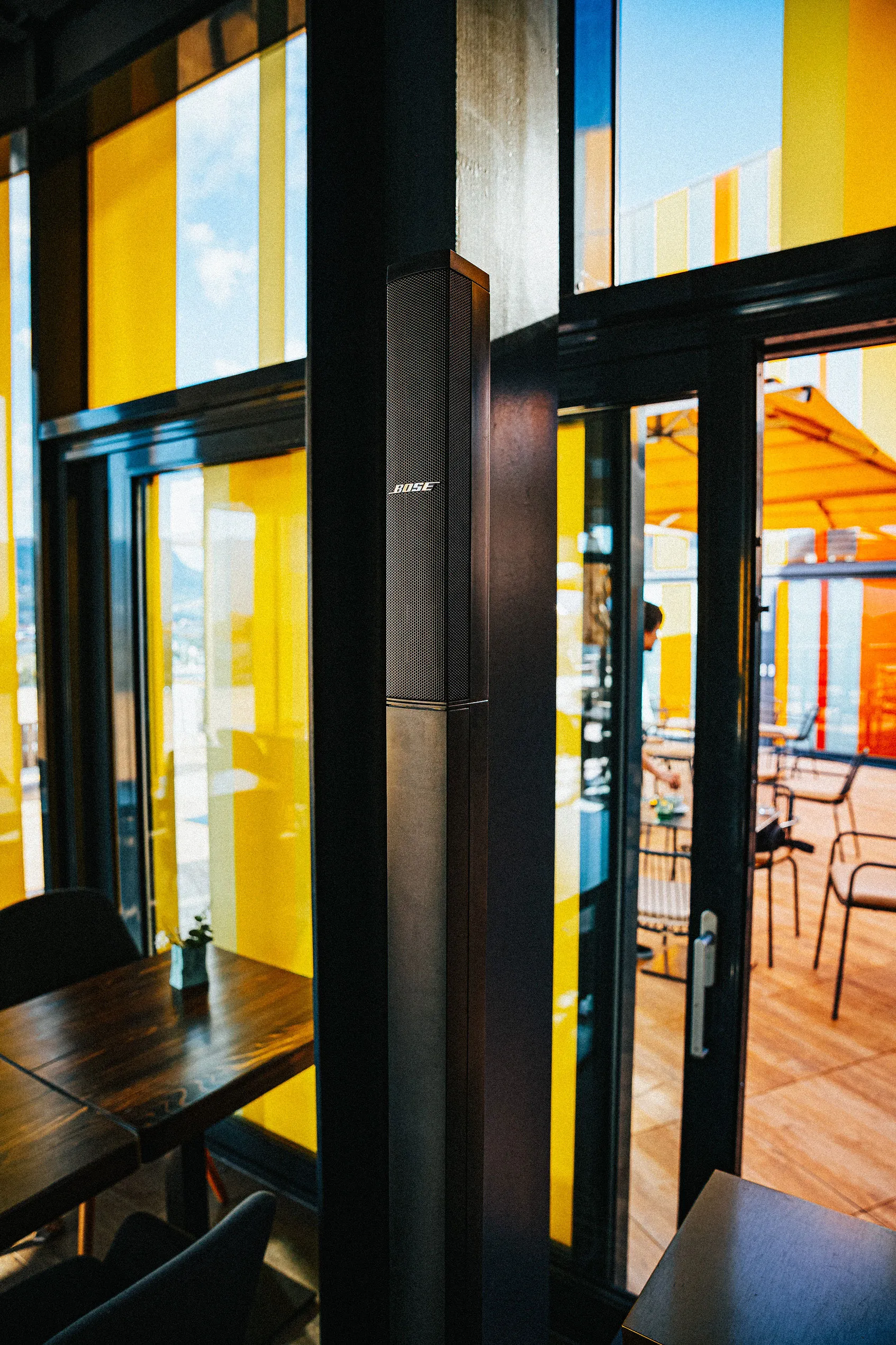
Invisible speakers are only half the solution. The other half is the system architecture that connects them:
Every commercial audio installation we design includes independent zones. A typical restaurant might have: main dining, bar area, terrace, and restrooms — each with independent volume control and source selection. This means the bar can have energised evening music while the dining room stays at conversation level.
We use Bose ControlSpace or equivalent processors to manage EQ, volume limiting, zone routing, and scheduling. The processor lives in a rack or utility closet — out of sight, protecting speakers from damage by limiting maximum volume and ensuring consistent sound regardless of who’s operating the system.
Many of our installations include automated scheduling through Meridian Chapters or similar platforms. The system automatically adjusts volume and music mood throughout the day — soft jazz at breakfast, upbeat bossa nova at lunch, deeper grooves in the evening — without any staff intervention.
Every system accepts multiple sources: streaming music platforms, a DJ input for live events, microphone inputs for announcements or live music, and background music services. Switching between sources is one button or one app tap.
Invisible audio costs more than visible audio — that’s the honest truth. Custom mounting, colour matching, DSP processing, and careful calibration all add to the project. But the return is measurable: guest satisfaction scores improve, average table time increases (guests linger in spaces that sound good), and the venue maintains its design integrity.
Typical investment ranges for our AV integration projects:
| Venue Type | System Scope | Investment Range |
|---|---|---|
| Small restaurant (50-80 seats) | 4-6 speakers, 2 zones, basic DSP | €3,000 - €6,000 |
| Medium restaurant/bar (80-150 seats) | 8-12 speakers, 3-4 zones, full DSP | €6,000 - €12,000 |
| Hotel public areas (lobby + bar + terrace) | 15-25 speakers, 5+ zones, scheduling | €12,000 - €25,000 |
| Full hotel (all public + pool + spa) | 30+ speakers, 8+ zones, enterprise DSP | €25,000 - €60,000+ |
All prices exclude 25% VAT. Includes design, equipment, installation, and calibration.
These systems have a 10-15 year lifespan when properly installed. Divided across that period, the daily cost is less than a cocktail.
Every venue is different — stone walls behave differently from plasterboard, outdoor terraces need different approaches than indoor dining rooms, and a boutique hotel has different requirements from a beach club. The right system starts with understanding the space.
Contact us for a consultation. We’ll visit the venue, assess the acoustics, understand your operational needs, and propose a system design with transparent pricing.
Related reading:
Cosmic Production designs and installs commercial audio systems for hotels, restaurants, and venues across Croatia’s Adriatic coast. As a Bose Professional partner, we combine world-class equipment with local expertise in acoustics, architecture, and hospitality operations. Learn more about our AV integration services.
How we deploy Bose Professional audio systems across Croatia's most demanding environments — from salt-air beach clubs to superyacht decks.
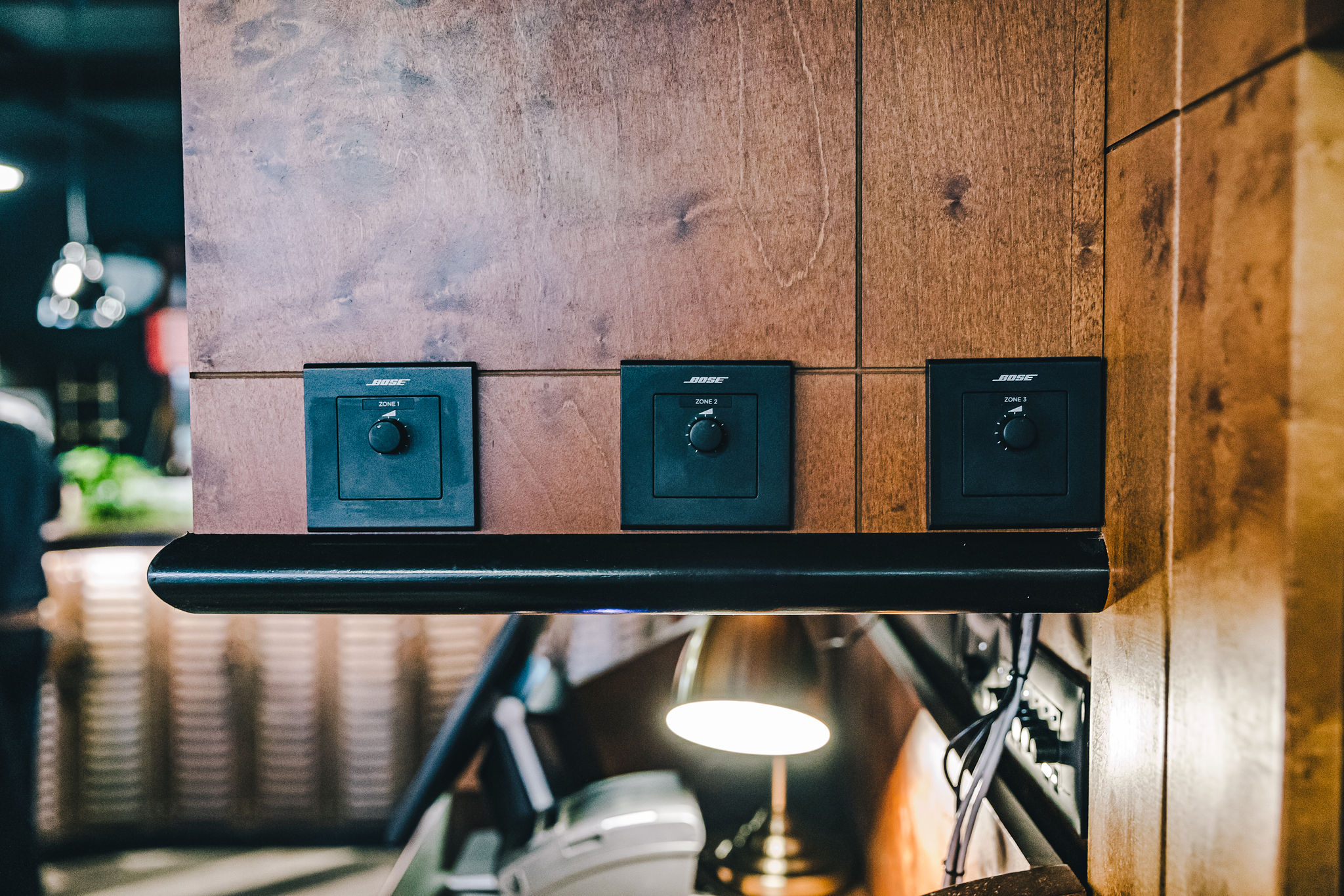
Five restaurant AV installations across Split — different venues, different challenges, different speaker solutions.
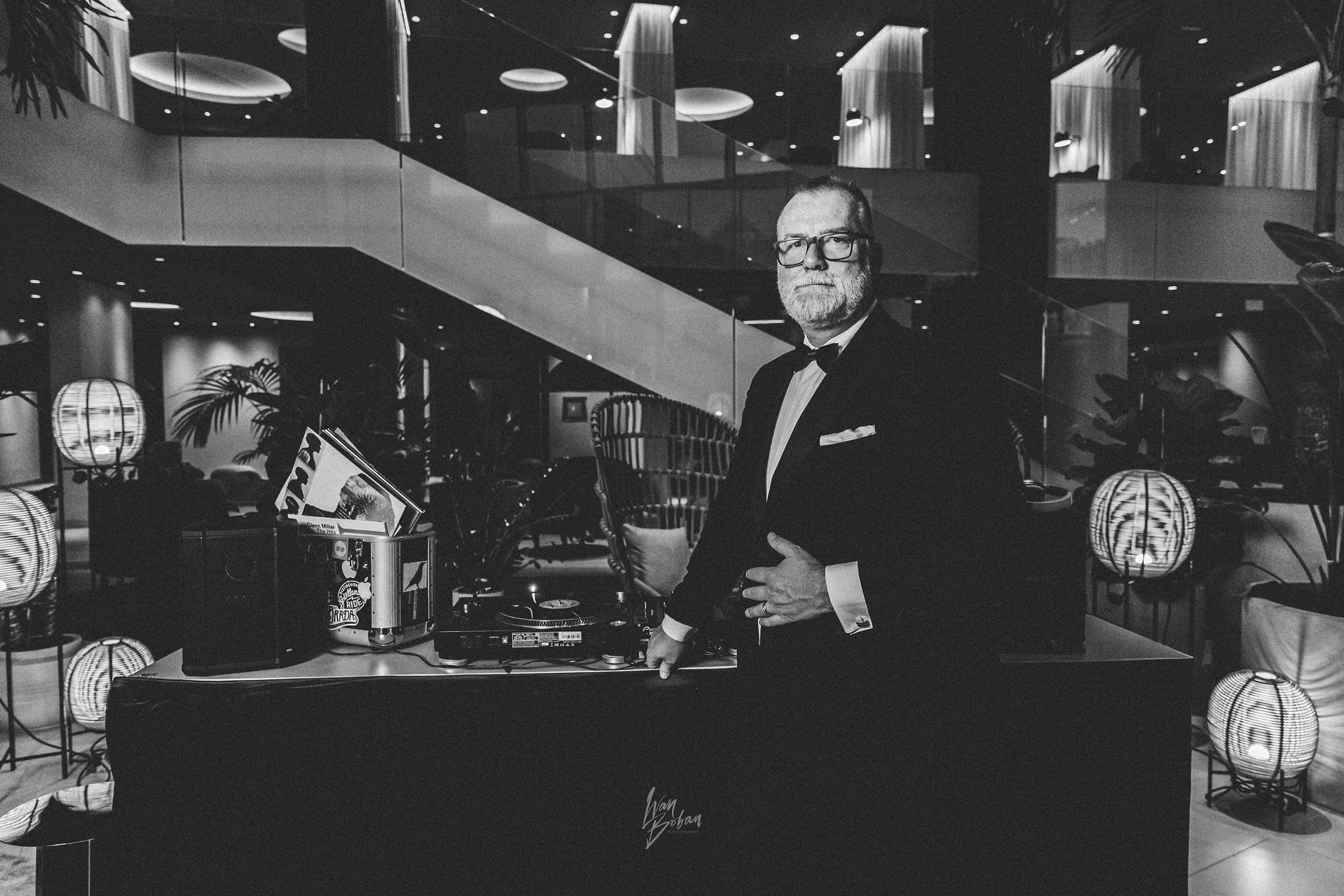
How to design hotel lobby audio: zones, speaker selection, music programming and volume control — by a team installing Bose systems in Croatian hotels.
From AV integration to DJ booking, we provide complete event production services across Croatia.