AV Integration
The Art of Invisible Audio: Sound Systems That Disappear
How professional AV design creates sound systems that complement architecture instead of competing with it.
Everything venue owners need to know about permanent audio installations for beach bars and clubs on the Adriatic. Speaker selection, weatherproofing, power.
Ivan Boban
Updated May 31, 2026
A beach bar without music is just a bar on sand. But a beach bar with bad audio — consumer speakers distorting at half volume, Bluetooth cutting out every time someone walks between the phone and the speaker, one corner blasting while the other hears nothing — is worse than silence.
If you’re a beach bar or beach club owner on the Croatian coast, permanent audio installation isn’t a luxury. It’s operational infrastructure, as essential as your ice machine or your POS system. Here’s how to do it right.
Before discussing speakers and zones, understand what you’re installing into:
Salt air corrodes metal components — terminals, connectors, grilles, mounting hardware. Any equipment rated for “indoor/outdoor” but not specifically marine/coastal-rated will deteriorate within 1-2 seasons.
UV exposure degrades plastic housings, cable insulation, and speaker cones. Equipment in direct Adriatic sun endures 2,500+ hours of UV per season. Consumer speakers turn brittle and crack. Professional outdoor speakers use UV-stabilised materials that maintain integrity across years.
Sand and dust infiltrate every opening — speaker ports, cable connections, control surfaces. Fine Adriatic sand is particularly aggressive on mechanical components.
Wind is constant. The maestral arrives every summer afternoon at 10-20 knots. Sound gets pushed, scattered, and diminished. A system designed for still air will underperform by 40-60% in typical beach conditions.
Water — not just rain, but sea spray, pool splash, and the occasional wave. IP ratings matter. Minimum IP55 for any outdoor speaker position; IP66+ for anything below 2 metres or near a pool/beach edge.
A typical beach bar has 3-5 distinct zones that require independent audio treatment:
The social hub. Higher energy, higher volume. Guests are standing or on bar stools, conversations compete with the music intentionally. This zone can run 6-10dB louder than the dining zone.
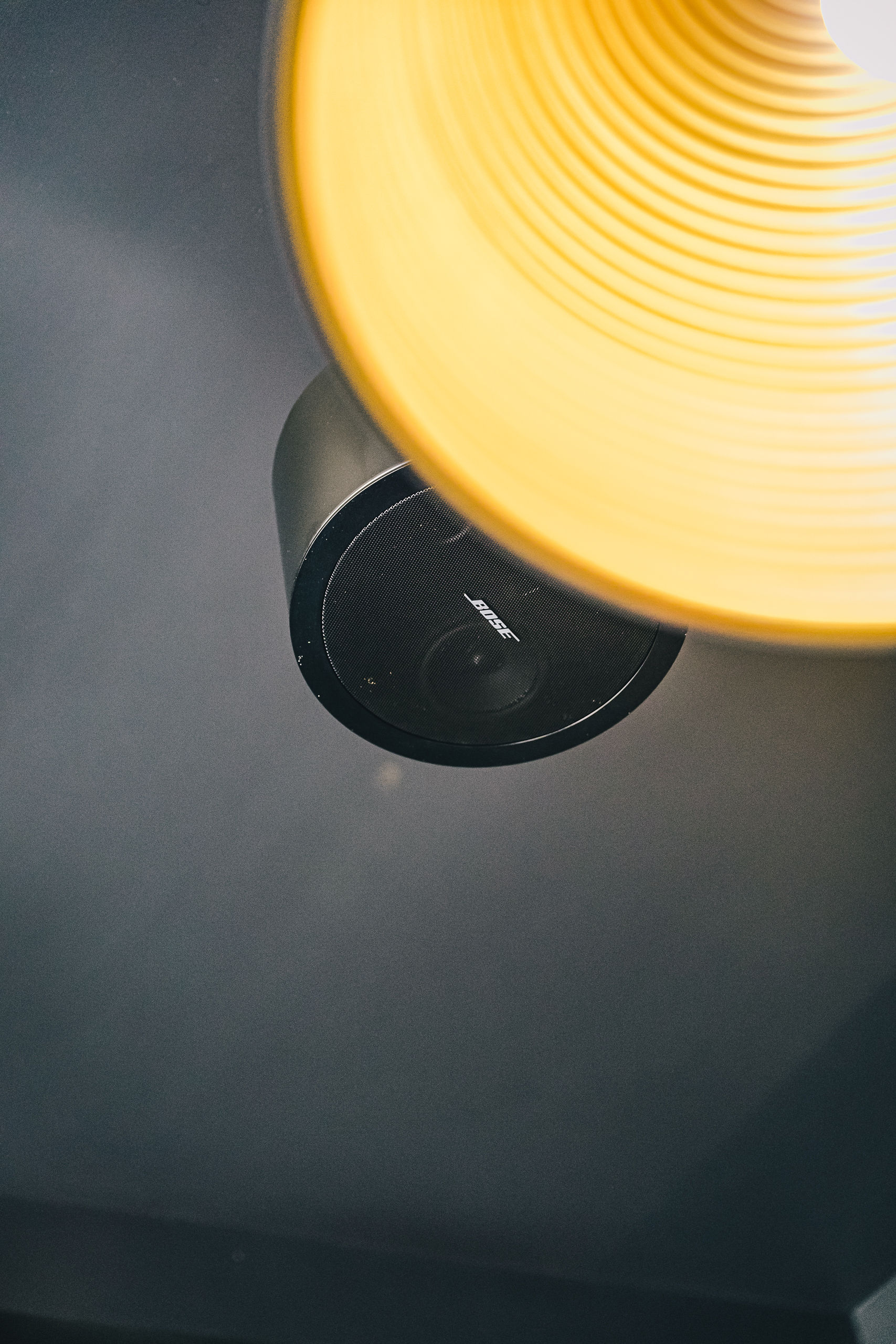
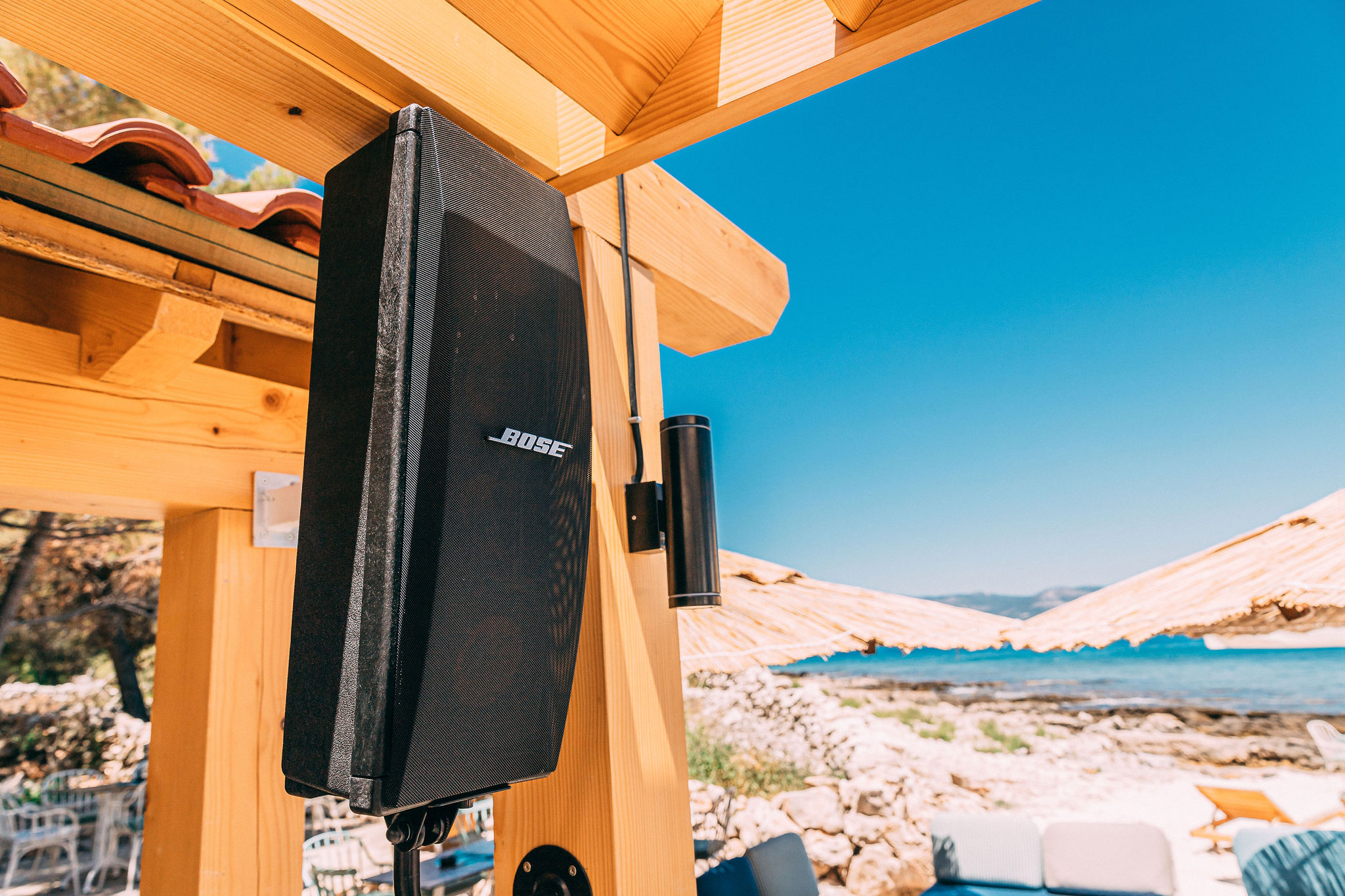
Speaker recommendation: 2-4 surface-mount speakers (Bose FreeSpace FS4SE) positioned above the bar, angled toward guest seating. If the bar has a canopy or roof structure, mount speakers underneath for weather protection and directional control.
Conversation-friendly. Music provides atmosphere without competing with meal enjoyment. Volume stays at “I can hear it but I don’t have to raise my voice” level.
Speaker recommendation: 4-8 distributed ceiling or pendant speakers under any covered dining structure. For open-air dining without a roof, post-mounted speakers at the perimeter, angled inward. Spacing of 3-4 metres between units for even coverage.
The chill zone. Low volume, warm sound. Guests are relaxing, reading, napping. The music should be barely perceptible — felt more than heard.
Speaker recommendation: Landscape-oriented speakers (Bose FreeSpace 360P) on posts or in planters scattered through the lounge area. The 360-degree dispersion pattern creates a gentle sound field without any directional hot spots.
Moderate energy. The pool area typically bridges bar energy and lounge relaxation. Waterproof rating is critical — speakers near pools get splashed constantly.
The transformation zone. During daytime, it might function as additional dining or lounge. In the evening, it becomes the entertainment focus with higher volume, potential DJ setup, and lighting.
Speaker recommendation: This zone needs the most powerful speakers — potentially separate from the distributed background system. A pair of Bose F1 columns or equivalent handles the transition from background to entertainment mode.
A permanent beach bar installation typically includes:
Speakers: 8-16 units depending on venue size, distributed across zones Amplification: Commercial multi-channel amplifier (Bose PowerMatch or equivalent) in a weather-protected rack location DSP processing: Zone routing, EQ per zone, volume limiting per zone, scheduled programming Source inputs: Streaming music (via network player), DJ input (XLR/RCA from DJ booth), microphone input (for announcements), backup source (FM/DAB tuner) Control: Wall-mounted volume controls per zone and/or tablet/phone app for wireless management Cabling: Marine-grade speaker cable with UV-resistant jacketing, waterproof connectors at all junction points
The speakers themselves are weather-rated, but the supporting infrastructure needs equal attention:
Amplifier and DSP location: In a dry, ventilated equipment room or weatherproof rack enclosure. Never exposed to direct sun or rain. The equipment room should have ventilation or air conditioning — amplifiers generate heat and need airflow.
Cable runs: All cable runs should use UV-resistant conduit. Buried runs are ideal for permanent installations. Exposed runs along structures need cable clips rated for outdoor use and UV exposure.
Connectors: Every outdoor connector point gets weatherproof treatment — either IP-rated connectors (Neutrik weatherPROOF series) or sealed junction boxes. Corrosion at a connector joint is the single most common failure point in coastal installations.
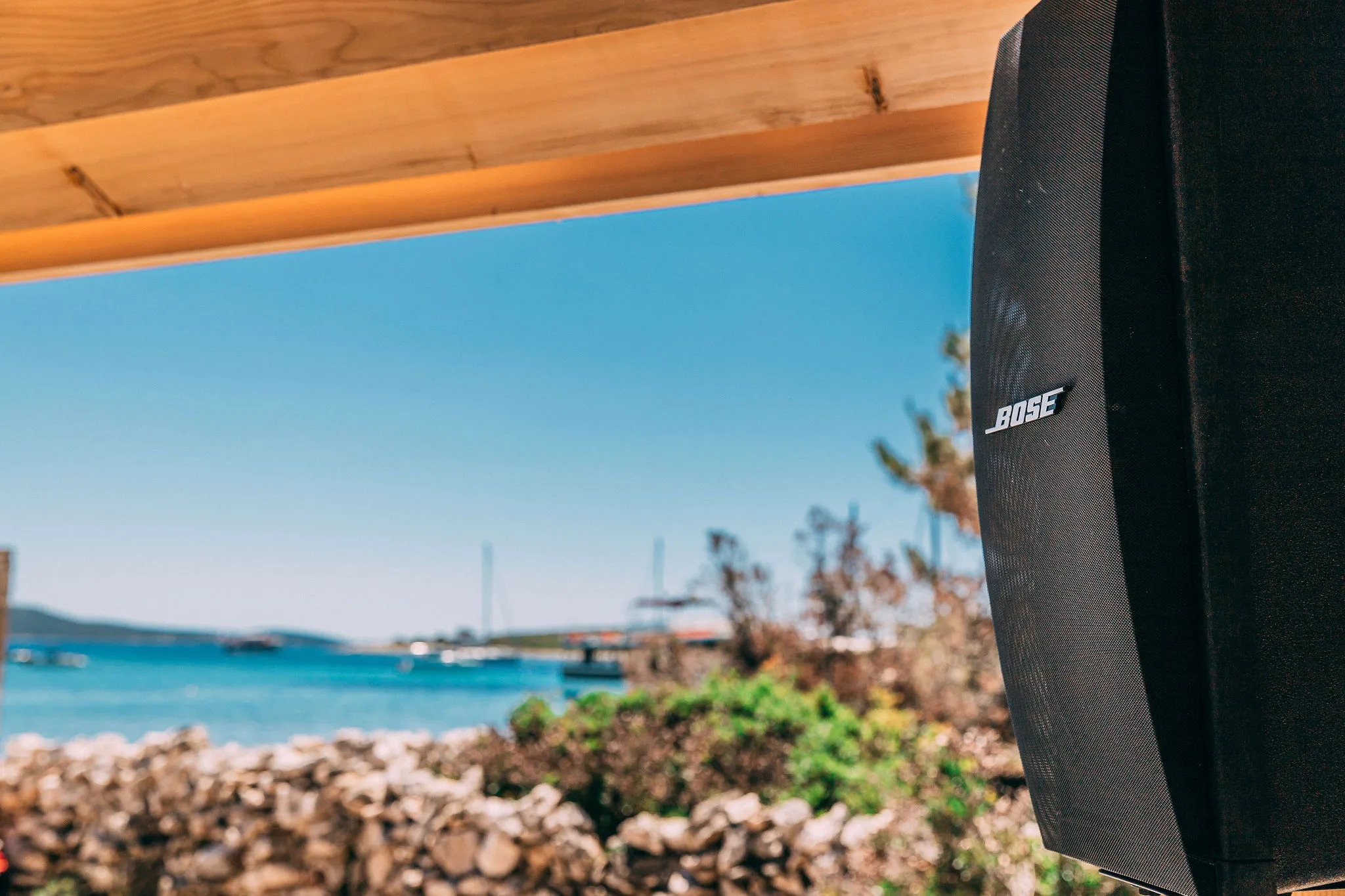
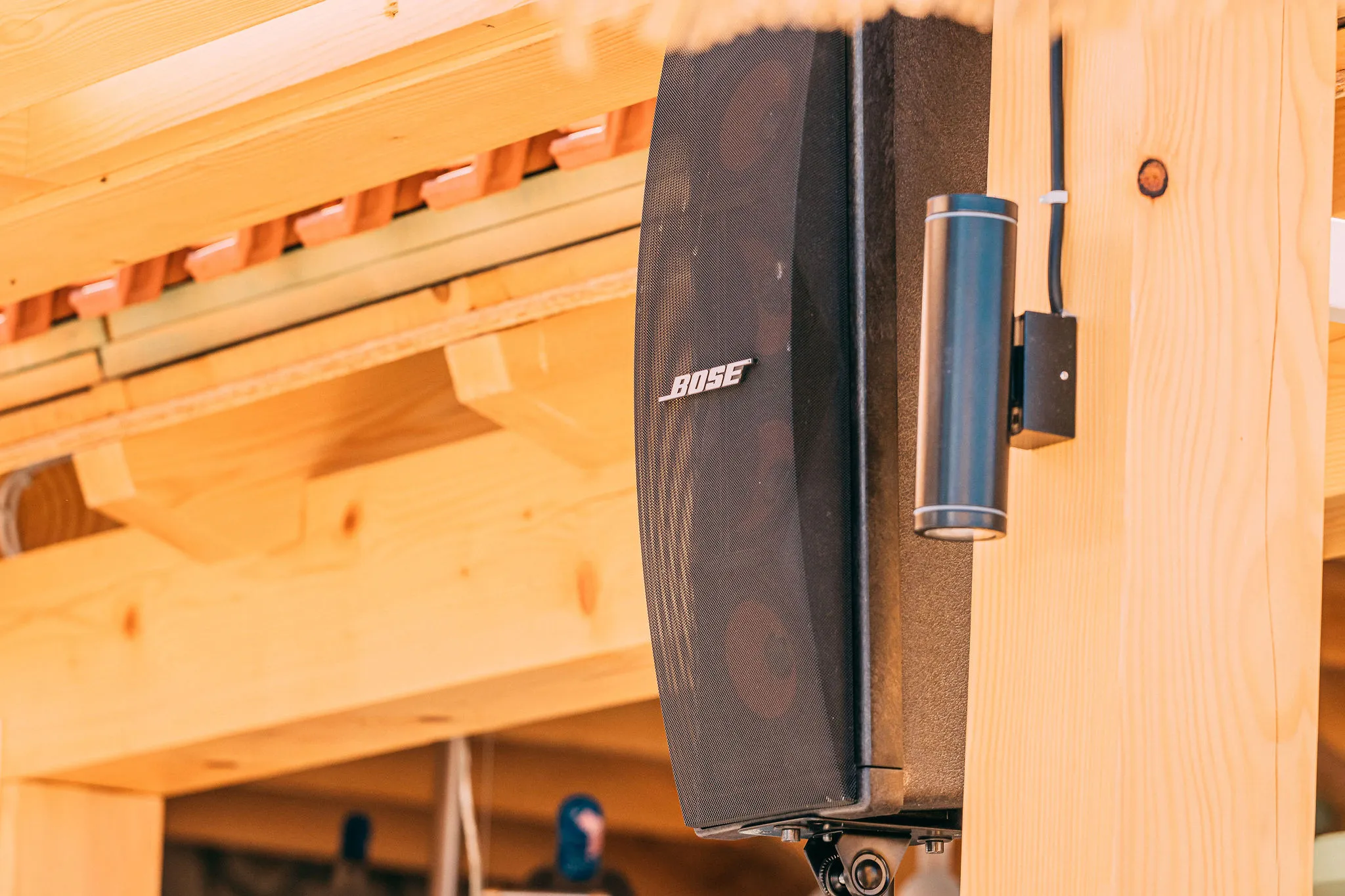
Speaker mounting: Stainless steel hardware only. Standard zinc-plated mounting bolts will corrode within one season in salt air. We use 316 stainless steel for all mounting hardware in marine/coastal environments.
End-of-season maintenance extends system life dramatically:
October (post-season):
April (pre-season):
| Venue Size | Zones | Speakers | Typical Investment |
|---|---|---|---|
| Small beach bar (30-50 seats) | 2-3 | 4-8 | €4,000 - €8,000 |
| Medium beach club (50-120 seats) | 3-4 | 8-14 | €8,000 - €16,000 |
| Large beach club (120-300 seats) | 4-5 | 14-24 | €16,000 - €30,000 |
| Premium beach club with DJ stage | 5+ | 20-30+ | €25,000 - €50,000+ |
All prices exclude 25% VAT. Includes design, equipment, installation, calibration, and first-season maintenance check.
These systems have a 10-15 year lifespan with proper seasonal maintenance. That’s €1-€10/day depending on venue size — less than the revenue from a single table.
Contact us for a free venue assessment. We’ll visit your beach bar, assess the acoustic environment, and propose a system that matches your design, your operations, and your budget.
Related reading:
Cosmic Production designs and installs permanent audio systems for beach bars and clubs across Croatia. Explore our AV integration services.
How professional AV design creates sound systems that complement architecture instead of competing with it.
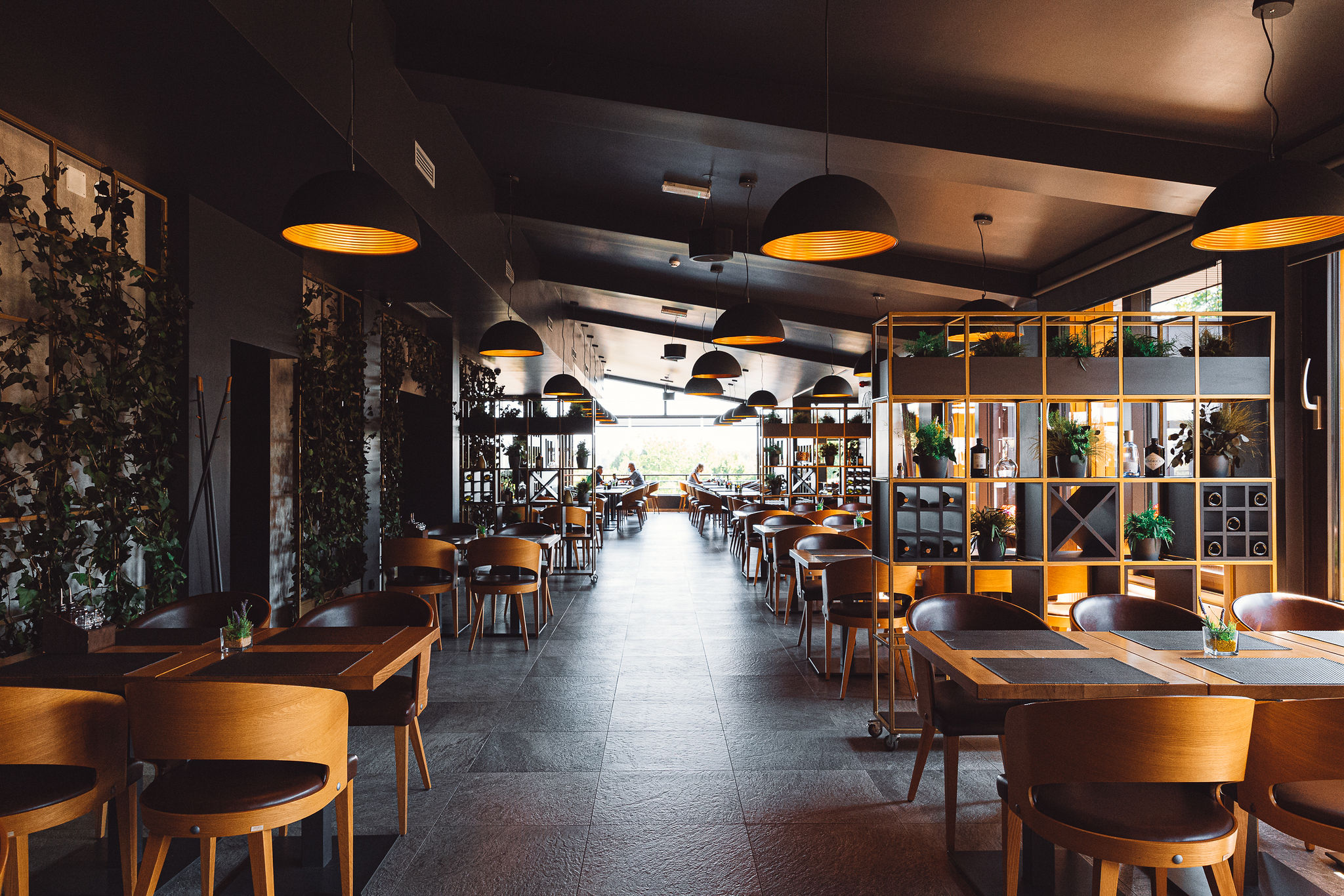
How we deploy Bose Professional audio systems across Croatia's most demanding environments — from salt-air beach clubs to superyacht decks.
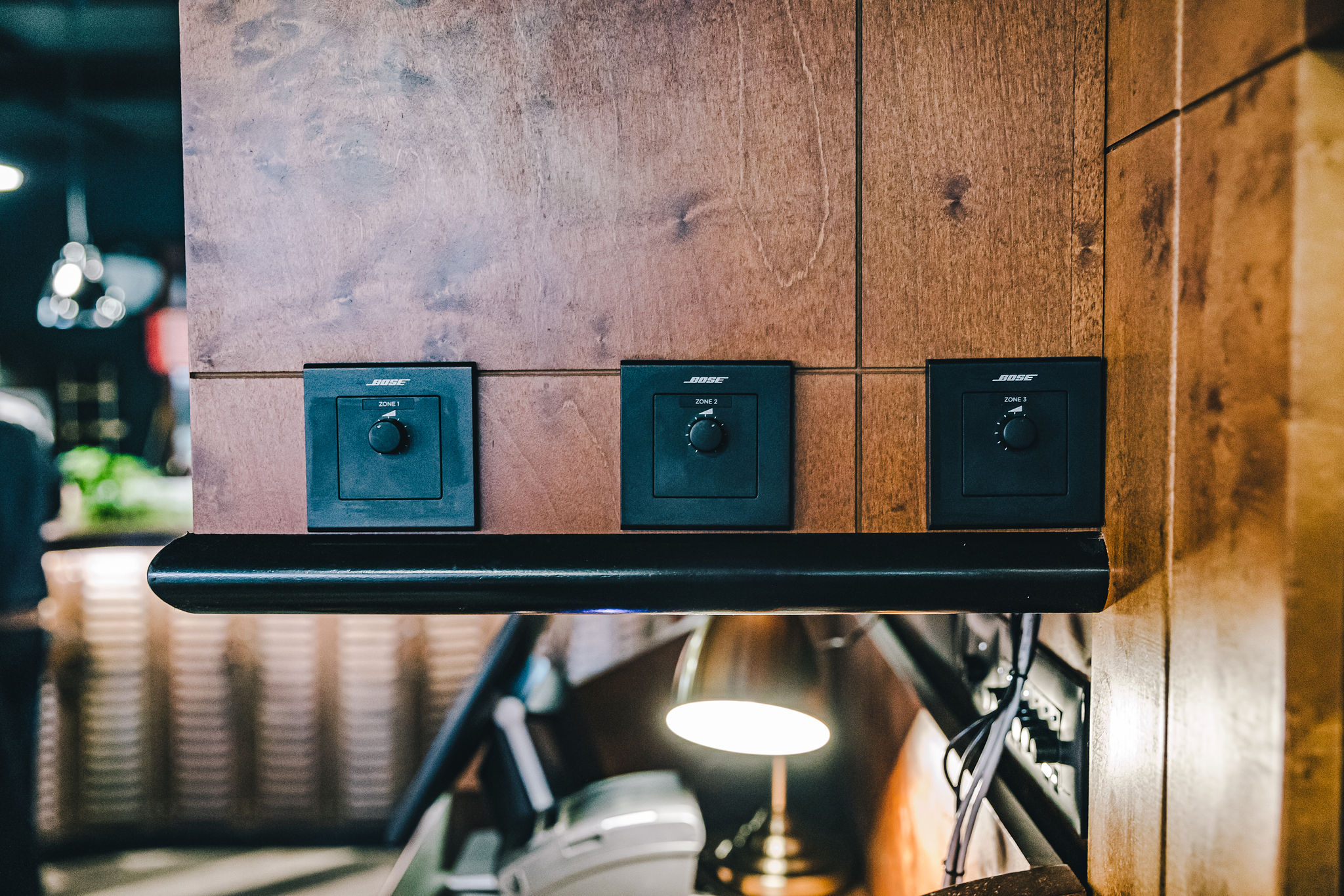
Five restaurant AV installations across Split — different venues, different challenges, different speaker solutions.
From AV integration to DJ booking, we provide complete event production services across Croatia.